jest 에러 테스트를 만들다가 컨디션이 어떻게 된 건지 굉장히 헷갈리는 부분이 생겨서 정리를 해두려 한다.
/* Errors can be handled using the .catch method.
Make sure to add expect.assertions to verify that a certain number of assertions are called.
Otherwise a fulfilled promise would not fail the test: */

// using async/await.
it('tests error with async/await', async () => {
  expect.assertions(1);
  try {
    await user.getUserName(1);
  } catch (e) {
    expect(e).toEqual({
      error: 'User with 1 not found.',
    });
  }
});
출처 : https://jestjs.io/docs/en/tutorial-async#error-handling
jest 공식 문서에 나와있는 error handling 설명이다.
내가 헷갈렸던 부분은 expect.assertions(1); 이 코드이다.
Make sure to add expect.assertions to verify that a certain number of assertions are called. Otherwise a fulfilled promise would not fail the test
설명을 보면 반드시 assertions 코드를 추가하라고 나와 있다. 저게 무슨 말일까.. 이해가 가질 않았다.
예제 코드를 돌려보고 이해할 수 있었다.
describe.only('buildWhereOptionsFromFiltersForExamQuestion2', () => {
  test('throw when examID is invalid', async () => {
    expect.assertions(1)
    const userModel = await createSuperUser()
    const { examService } = createServices(sequelize, userModel)
    try {
      await examService.buildWhereOptionsFromFiltersForExamQuestion({ examID: 1 })
    } catch (error) {
      expect(error).toEqual(new UserInputError('invalid examID'))
    }
  })
})
이 테스트는 examID가 유효하지 않을 때 발생시키는 에러를 테스트하는 것이다. 근데 유효한 examID ‘1’을 부여하면 ?
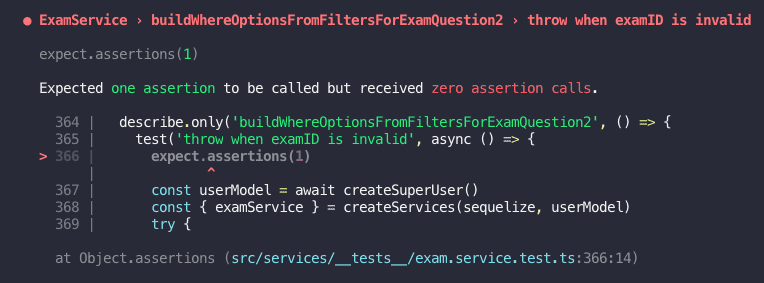
이러한 에러가 발생한다. “너가 의도한 one assertion이 아닌 zero assertion이 돌아왔다.” 만약 assertions 코드가 없었더라면 우리는 내가 의도했던 에러가 발생했는지 안했는지 알 방도가 없다.
예를 들어 assertions 코드가 없고, 에러를 발생시키지 않는 유효한 값이 들어가면 try 구문만 거치고 저 테스트는 끝났을 것이다. 에러 테스트를 제대로 하지 못하고 있는 것이다. 우리가 원했던 건 “내가 예상했던 에러가 제대로 발생하는가”를 확인하는 것이다.
그렇다면 .rejects 함수는 어떨까?
describe.only('buildWhereOptionsFromFiltersForExamQuestion1', () => {
  test('throw when examID is invalid', async () => {
    const userModel = await createSuperUser()
    const { examService } = createServices(sequelize, userModel)
    await expect(
      examService.buildWhereOptionsFromFiltersForExamQuestion({ examID: 1 }),
    ).rejects.toEqual(new UserInputError('invalid examID'))
  })
})
assertions 코드를 추가하지 않아도 된다. 그 이유는 rejects 함수 안에 assertions 기능이 내재되어 있기 때문이다. assertions 코드 없이 유효한 examID 값인 ‘1’을 부여해도 rejects 함수는 “너가 예상한 에러가 발생하지 않았다”는 것을 알려준다.
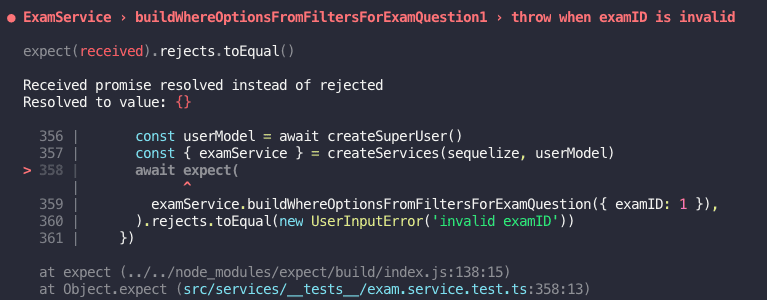
“Received promise resolved instead of rejected” 불합격으로 처리된 것이 아닌 해결된 promise가 돌아왔다는 것이다. 에러(불합격)를 예상(expect)했지만 말이다.